Whether you are completely new or returning, this course is designed to guide you step by step into the key ideas, definitions, and principles that shape the study of Christian Hermetic thought.
This course begins with the basics. Before diving into advanced material, it’s important that we establish a shared vocabulary. Words like philosophy, theology, soul, and Hermeticism carry deep meaning, and we’ll be taking time to clarify them so that every student is on the same page. Along the way, we’ll also examine and overturn some of the common stereotypes or misunderstandings surrounding these terms.
You can expect each section to highlight important key terms in clear sections. Each term will be introduced, defined, and explored in context so that you can build a strong foundation for further study. You’ll also find space in our discussions to ask questions, share reflections, and connect with others who are walking the same path of learning.
What is Philosophy?
Philosophy comes from the Greek words philos (“love” or “friendship”) and sophia (“wisdom”). Thus, it literally means “love of wisdom.” The term is traditionally attributed to Pythagoras, who used it to describe someone who seeks wisdom rather than claiming to possess it. In this sense, the philosopher is not someone who boasts of having arrived at ultimate truth, but one who recognizes their own limitations and humbly sets out on a lifelong pursuit of wisdom.
At its heart, philosophy explores fundamental questions about existence, knowledge, values, reason, mind, and language. It asks questions such as: “What is real? How can we know truth? What is the good life? Do human beings have free will? ” These questions cannot always be answered with physical evidence alone, but require careful reasoning, debate, and reflection.
Philosophy employs tools such as rational argument, critical analysis, and systematic thinking. By using these tools, philosophers aim to uncover principles that are not bound to one culture, time, or opinion, but which hold universally. Philosophical axioms—like the law of identity (A = A)—serve as foundational truths. These axioms, once recognized as self-evident, become starting points for larger systems of thought.
Over time, philosophy has branched into many disciplines: ontology (the study of reality and being), epistemology (the study of knowledge), ethics (the study of good and evil, right and wrong), logic (the study of valid reasoning), and aesthetics (the study of beauty and art). Each branch addresses a different dimension of the human quest for wisdom, yet all remain interconnected.
Another way to understand philosophy is as a discipline that proceeds from what is known and observable—even if that observable phenomenon lies within the self. It is a journey that does not take divine revelation as its starting point, but rather begins with human reason and experience. This does not mean philosophy excludes God or spirituality, but that it seeks to approach such questions through rational inquiry rather than faith alone.
In short, philosophy seeks to understand reality through logical assumptions and rational exploration. It is the human attempt to examine the world as it is observed and experienced, and to construct a framework of meaning that allows us to live wisely. For this reason, philosophy has often been called the “mother of all sciences,” since every other field of study—from mathematics to physics to theology—has, at one point, emerged from philosophical reflection.
What is Philosophy?
Theology originates from the Greek words theos (god) and logos (word, discourse, or reason). At its simplest, theology means “the study of God.” However, it is more than an academic discipline, it is also an act of faith. Saint Anselm of Canterbury (1033–1109) famously defined theology as fides quaerens intellectum—“faith seeking understanding.” This phrase captures the spirit of theology: it begins with faith in the Divine and seeks to articulate and deepen that faith through rational reflection.
Unlike philosophy, which begins with observable reality and human reason, theology begins with revelation. Its first axiom is deus est—“God is.” From this starting point, theology asks: Who is God? What is His nature? How does He relate to creation? And what does that mean for humanity? These questions are approached with the conviction that God is both real and knowable, though never exhaustively comprehensible.
Theology draws on many sources of knowledge. These include Sacred Scripture (the Bible), Sacred Tradition (the teachings and practices handed down in the Church), and reason, often supported by philosophical methods. In this way, theology is not opposed to philosophy but works in harmony with it, using reason as a tool to better understand revelation.
The branches of theology reflect the breadth of questions it seeks to answer:
- Biblical theology studies the message of Scripture in its historical and literary contexts.
- Systematic theology organizes beliefs about God, creation, Christ, salvation, the Church, and last things into a coherent framework.
- Historical theology explores how Christian thought has developed over time.
- Moral theology (or ethics) examines how faith should shape human behavior.
- Mystical theology reflects on direct experiences of God and the transformation of the soul.
The ultimate goal of theology is not only intellectual understanding but transformation by coming to know God personally and living in accordance with His will. In this way, theology serves both the mind and the heart. It clarifies doctrine, deepens faith, and guides the believer into communion with the Divine.
Where philosophy seeks to understand existence through reason alone, theology seeks to understand God and the divine mysteries through the light of faith. Both disciplines are valuable, but they begin from different starting points and pursue different ends. Yet as Christian Hermeticism will show us, they can also meet and enrich each other.
What is Neoplatonism?
Neoplatonism is a philosophy that developed between the 3rd and 6th centuries AD but has roots in the teachings of Plato. To understand it, we first look at earlier phases:
- Old Platonism: The original teachings of Plato and his successors, emphasizing eternal forms and the study of ethics and knowledge.
- Middle Platonism: A blend of Platonism with Stoicism and Pythagoreanism, emphasizing theism and divine hierarchies, including the concept of “The One.”
- Neoplatonism: Emphasized the One as beyond thought but accessible through emanation. It focused on the ascent of the soul and practices like theurgy.
What makes Neoplatonism distinct is its vision of reality as a great chain of being flowing from the ineffable One. The One is beyond all categories of thought—it cannot be grasped or defined—yet it is the ultimate source of everything. From the One emanates Nous (Divine Mind), and from the Nous emanates Logos (Divine Reason). Humanity, as part of this descending order, longs to return to its divine origin. This return is made possible through intellectual contemplation, moral purification, and spiritual practices aimed at reuniting the soul with the One.
The major thinker of Neoplatonism was Plotinus (204–270 AD), whose writings, collected in the Enneads, laid the foundation of the movement. He taught that the goal of life is mystical union with the One, achieved not through external rituals but through inward purification and contemplation. His student Porphyry expanded on these ideas, and later philosophers like Iamblichus and Proclus emphasized theurgic practices—rituals intended to call down divine presence and elevate the soul.
Neoplatonism also introduced the practice of theurgy, or “god-working,” rituals intended to elevate the soul and align it with divine realities. This gave Neoplatonism not just a theoretical but also a practical, mystical character. For this reason, it became a bridge between philosophy and religion.
The system also influenced broader culture. In the pagan world, Neoplatonism provided a spiritual depth that complemented traditional religion. In Judaism, Philo of Alexandria and later thinkers integrated Platonic themes into their understanding of God and creation. In Christianity, Church Fathers like St. Augustine, Origen, and Pseudo-Dionysius drew upon Neoplatonic concepts to explain divine transcendence, the immaterial soul, and the soul’s ascent to God.
Ultimately, Neoplatonism provided early Christians with a philosophical language to articulate mysteries of faith: God as utterly transcendent yet immanent, the human soul as called to return to its source, and the cosmos as ordered by divine reason. Its influence stretched well into the Middle Ages, shaping both Western Christian mysticism and Eastern Orthodox theology.
What is Christian Neoplatonism?
Christian Neoplatonism emerged as early theologians adapted Neoplatonic ideas to Christian doctrine. The Platonic “One” was interpreted as the Christian God, and ideas about the immaterial world and the soul’s ascent were integrated into Christian theology.
One of the most important figures in this process was St. Augustine of Hippo (354–430), who drew heavily from Neoplatonic thought to explain Christian doctrines such as the nature of God, the reality of evil, and the structure of the human soul. Neoplatonism helped him articulate how evil is not a substance but a privation of good, and how the human soul is oriented toward union with God.
Other early Christian thinkers, such as Origen and Clement of Alexandria, also engaged with Neoplatonic philosophy. They saw in Neoplatonism a framework that could be harmonized with the truths of revelation—an intellectual bridge that made Christianity intelligible in the philosophical culture of the Greco-Roman world.
Christian Neoplatonism emphasized several key themes:
- The identification of Plato’s “One” with the Christian God, the source of all being and goodness.
- The notion of the immaterial and immortal soul, destined for union with God.
- The role of reason and contemplation in the spiritual ascent of the believer.
- The integration of faith and reason, where philosophy serves as a “handmaiden” to theology.
This synthesis had profound consequences for Christian spirituality. It contributed to the development of mystical theology, with its emphasis on the soul’s journey to God. It also shaped medieval scholasticism, which sought to harmonize philosophy and theology in systematic ways.
In short, Christian Neoplatonism represents the Church’s effort to take the best insights of Greek philosophy and use them as tools for clarifying and deepening Christian doctrine. Rather than seeing philosophy and faith as opposed, it demonstrates how reason and revelation can work together in the pursuit of divine truth.
What is Hermeticism?
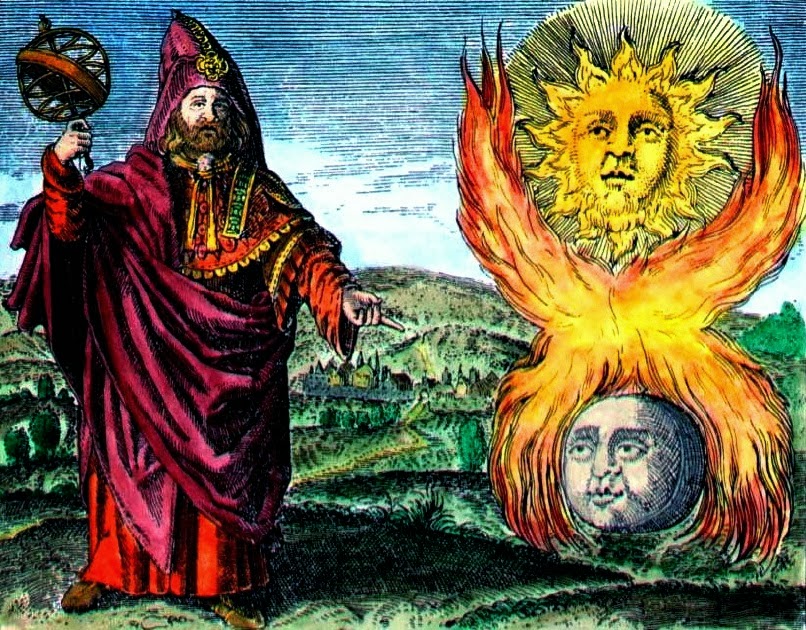
Hermeticism is a branch of philosophical thought that emerged in the late classical world, drawing upon Egyptian, Greek, Hebrew, and later Neoplatonic traditions. It takes its name from Hermes Trismegistus (“Hermes the Thrice Great”), a legendary figure who was thought to combine the wisdom of the Greek god Hermes and the Egyptian god Thoth. The writings attributed to him, such as the Corpus Hermeticum and the Asclepius, formed the foundation of Hermetic thought.
Hermeticism emphasizes several core principles:
- The unity of all things, affirming that everything in the cosmos is interconnected.
- The idea of ascent through knowledge (gnosis), in which the human soul awakens to its divine origin and returns to God through wisdom.
- The practice of theurgy and ritual, understood as ways of aligning oneself with divine forces.
- A vision of the cosmos as a living, spiritual reality infused with divine presence.
While Hermetic writings vary widely (some treat medicine, astrology, or alchemy, while others focus on mystical philosophy) the underlying theme is always the transformation of the human being through divine knowledge. Hermeticism is therefore less a single doctrine and more a method of approaching the Divine through reason, symbolism, and spiritual practice.
Importantly, Hermeticism influenced not only pagan philosophy but also Jewish and Christian thinkers, who found in its teachings a method for engaging with divine mysteries while remaining faithful to their own traditions.
What is Christian Hermeticism?
Christian Hermeticism is the synthesis of Christian theology with Hermetic philosophy and method. It does not replace or undermine Christian faith; rather, it seeks to enrich it by applying Hermetic tools of thought to the mysteries of God.
Key features of Christian Hermeticism include:
- Dual orientation: When reasoning from God to the world, the Christian Hermeticist is doing theology. When reasoning from the world to God, the Christian Hermeticist employs Hermetic philosophy.
- Method without compromise: Hermeticism provides a framework for understanding the relationship between the human and the divine, but it does not alter the core Christian axioms—such as God’s unity, love for mankind, and the saving work of Christ.
- Integration of truth: Christian Hermeticists affirm that “all truth is God’s truth.” Insights from Hermeticism are valued when they align with Christian revelation and deepen understanding of the soul’s ascent to God.
- Spiritual transformation: Like Hermeticism, Christian Hermeticism emphasizes inner change, but always within the context of Christian faith, aiming toward theosis—union with God.
This synthesis provided Christians with tools for deeper contemplation of divine mysteries while preserving doctrinal purity. Where Hermeticism highlights humanity’s capacity for ascent and transformation, Christianity anchors that ascent in God’s revelation through Christ. Together, they form a dynamic framework for engaging both the rational mind and the faithful heart in pursuit of wisdom.
Hermeticism and Other Practices
Christian Hermeticism has historically engaged with a variety of occult, esoteric, and mystical practices. While Christian faith provides the anchor, Hermetic philosophy offers a set of symbolic and contemplative tools that can intersect with other traditions. The key is discernment: practices are not adopted wholesale but reinterpreted in light of Christian revelation.
Alchemy
Alchemy, often seen as the art of turning base metals into gold, was always more than a physical science. For Hermetic and Christian Hermetic thinkers, it symbolized the transformation of the soul—refining what is base into what is pure. Christian Hermeticists interpreted alchemical processes as allegories of spiritual purification, death and resurrection, and the soul’s union with God. The “Philosopher’s Stone” was understood not as a physical object but as Christ Himself, the one who perfects creation.
Astrology
In the ancient world, astrology was considered a sacred science revealing correspondences between the heavens and the earth. Christian Hermeticists often engaged astrology symbolically, seeing the stars and planets as part of God’s created order and signs pointing to divine truths. While rejecting fatalism, they viewed astrology as a language of symbols reflecting the harmony of the cosmos, which ultimately points to Christ as Lord of creation.
Tarot and Symbolic Divination
Though the tarot deck as we know it developed later, symbolic systems of divination resonate with Hermetic ideas of correspondence (as above, so below). In a Christian Hermetic framework, tarot cards can be approached not for fortune-telling but as symbolic images that prompt reflection on spiritual truths. The archetypes in tarot (e.g., The Fool, The Hermit, The Sun) can be read allegorically, echoing themes of pilgrimage, wisdom, trial, and illumination present in Scripture and Christian mysticism.
Mystical Magic and Theurgy
Theurgy, or “god-working,” was a key element of Neoplatonism and Hermeticism. Christian Hermeticists reinterpreted theurgy as prayer, sacrament, and liturgy—ways of invoking divine presence through Christ. Rather than conjuring deities, Christian Hermeticism affirms participation in the sacraments of the Church as the true theurgy, where God Himself descends to transform the soul.
Esoteric Symbolism and Sacred Geometry
Hermeticism often employs symbols, numbers, and geometry to express hidden truths about the cosmos. Christian Hermeticists embraced sacred geometry (such as the cross, circle, or vesica piscis) as visual meditations on divine order. These symbols were understood as windows into the harmony of God’s creation and tools for contemplation.
Sources
- The Corpus Hermeticum – A collection of Greek texts attributed to Hermes Trismegistus, covering cosmology, theology, and spiritual rebirth.
- The Asclepius – A Latin Hermetic dialogue focusing on divine wisdom, the soul, and ritual practice.
- The Emerald Tablet – A short text central to Hermetic alchemy, famous for the axiom “As above, so below.”
- The Chaldean Oracles – A set of mystical texts blending Platonic philosophy with theurgic practice.
- Plotinus – The Enneads: Foundational text of Neoplatonism, teaching the soul’s ascent to union with the One.
- Porphyry – On the Cave of the Nymphs and Introduction to Aristotle’s Categories: Applying Neoplatonism to allegorical interpretation.
- Iamblichus – On the Mysteries: Defense of theurgy as a means of spiritual ascent.
- Proclus – The Elements of Theology: A systematic exploration of Neoplatonic metaphysics.
- The Bible (Old and New Testaments) – The foundational text of Christian faith and theology.
- The Church Fathers:
- St. Augustine of Hippo – Particularly Confessions and The City of God, where Neoplatonic ideas are adapted to Christian theology.
- Origen – Works such as On First Principles, exploring allegorical interpretations of Scripture and the soul’s ascent.
- Clement of Alexandria – Stromata, integrating Greek philosophy with Christian teaching.
- Mystical Writers:
- Pseudo-Dionysius the Areopagite – The Mystical Theology and The Divine Names, emphasizing God’s transcendence and mystical union.
- Meister Eckhart – Sermons and treatises on the soul’s union with God.
- Later Christian mystics influenced by Platonic and Hermetic thought, such as St. John of the Cross and Jacob Boehme.
- Marsilio Ficino – Translated Plato and the Corpus Hermeticum into Latin; writings on Christian Platonism and the immortality of the soul.
- Giovanni Pico della Mirandola – Oration on the Dignity of Man, synthesizing Christian, Platonic, and Hermetic traditions.
- Jacob Boehme – Christian mystic whose writings reflect Hermetic and alchemical symbolism within a biblical framework.
- Henry More and the Cambridge Platonists – 17th-century thinkers who integrated Platonism and Christian theology.